
Within the last quarter, SolarEdge Technologies (NASDAQ:SEDG) has observed the following analyst ratings:
| Bullish | Somewhat Bullish | Indifferent | Somewhat Bearish | Bearish | |
|---|---|---|---|---|---|
| Total Ratings | 4 | 4 | 2 | 0 | 0 |
| Last 30D | 0 | 1 | 0 | 0 | 0 |
| 1M Ago | 1 | 0 | 1 | 0 | 0 |
| 2M Ago | 1 | 1 | 0 | 0 | 0 |
| 3M Ago | 2 | 2 | 1 | 0 | 0 |
According to 10 analyst offering 12-month price targets in the last 3 months, SolarEdge Technologies has an average price target of $371.7 with a high of $490.00 and a low of $255.00.
Below is a summary of how these 10 analysts rated SolarEdge Technologies over the past 3 months. The greater the number of bullish ratings, the more positive analysts are on the stock and the greater the number of bearish ratings, the more negative analysts are on the stock
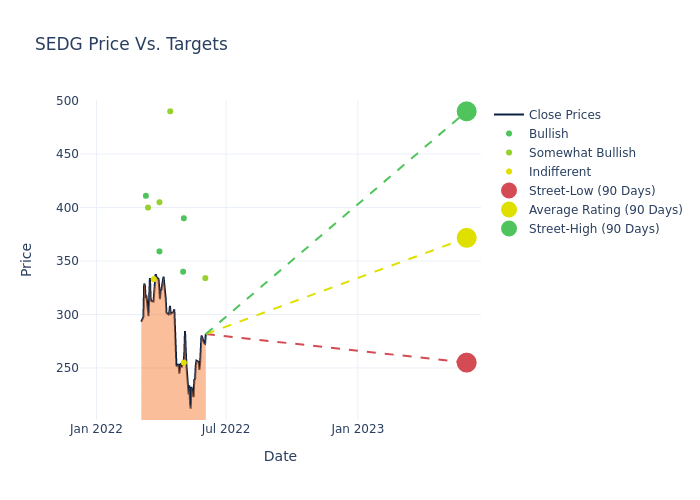
This current average has increased by 12.44% from the previous average price target of $330.57.
Analyst Ratings: What Are They?
Analysts work in banking and financial systems and typically specialize in reporting for stocks or defined sectors. Analysts may attend company conference calls and meetings, research company financial statements, and communicate with insiders to publish “analyst ratings” for stocks. Analysts typically rate each stock once per quarter.
Some analysts also offer predictions for helpful metrics such as earnings, revenue, and growth estimates to provide further guidance as to what to do with certain tickers. It is important to keep in mind that while stock and sector analysts are specialists, they are also human and can only forecast their beliefs to traders.
This article was generated by Benzinga’s automated content engine and reviewed by an editor.